The exact blueprint for relocating and settling in Dubai.
A concentrated summary of facts with no fluff. We have systematized the procedures for obtaining an Emirates ID, opening bank accounts, signing Ejari contracts, and interacting with UAE government entities.
Covered Jurisdictions:
Visas and Identification
The procedure for passing the Medical Fitness Test, submitting biometrics, and securing a residency visa. Sponsorship statuses for family members.
Real Estate (DLD)
Registering an Ejari contract, paying deposits, and connecting DEWA utilities alongside internet providers (Du/Etisalat).
Vehicles (RTA)
Converting your driving license, vehicle registration, mandatory insurance, and navigating the Salik toll road system.
Residency Status Infrastructure.
The Emirates ID is the fundamental document for any expat in Dubai. Without it, renting property via the Ejari system, opening a bank account, purchasing a vehicle, and connecting basic utilities are impossible.
Timeline and Metrics
- Processing Time: 5–14 business days
- Validity Period: 1, 2, or 10 years (Golden)
- Late Penalty: 20 AED / day
Entry Permit
An electronic visa (eVisa) that initiates the relocation process. It allows you to enter the UAE and stay for up to 60 days to complete all bureaucratic procedures for residency processing.
Medical Fitness Test
Mandatory medical examination. It includes a blood draw (screening for HIV, Hepatitis B/C, Syphilis) and a chest X-ray (Tuberculosis). Results are typically ready within 24 hours.
Biometrics (ICP)
A visit to the Federal Authority for Identity and Citizenship (ICP) center. This involves retinal scanning, fingerprinting of all digits, and capturing a digital photograph for the database.
Emirates ID Issuance
Following the approval of the medical test and biometrics, the residency is issued electronically. You receive a digital ID in the UAE Pass application, followed by the physical plastic identification card.
Contract and Payment Architecture.
The UAE rental market is strictly regulated by the government through the Dubai Land Department (DLD). The primary difference compared to Europe and the CIS is the advance payment system via bank cheques and the presence of hidden municipal fees.
Initial Expense Structure
- Agency Fee: 5% (+5% VAT)
- Security Deposit: 5% (unfurnished) / 10% (furnished)
- Ejari Registration: ~220 AED
- DEWA Deposit: 2,000 AED (apartment)
Ejari System
The official registration of the tenancy contract in the government database. It serves as legal protection against illegal eviction and unauthorized price hikes. Without an Ejari certificate, connecting internet and utility services is impossible.
DEWA & Housing Fee
Management of electricity and water supply. An important nuance: the monthly DEWA bill automatically includes a municipal tax (Housing Fee) equivalent to 5% of the annual rent, divided into 12 months.
Payment by Cheques
Rent is paid in advance using bank cheques. The market standard is 1 to 4 cheques per year (e.g., 4 cheques means payment every 3 months). Issuing a bounced cheque incurs strict financial penalties and the risk of contract termination.
Air Conditioning (Chiller)
Air conditioning is often billed separately from electricity by specialized providers (e.g., Empower). It is highly recommended to look for buildings with a «Chiller Free» status, where the landlord covers the cooling costs.
Vehicles and Logistics.
Dubai is designed for motorists. The infrastructure is managed by the RTA. Purchasing a car here is cost-effective due to the absence of taxes, but a strict automated fine system demands maximum discipline.
Rates and Fees (Base)
- Salik Toll: 4.00 AED / gate
- Fuel (Super 98): ~3.05 AED / liter
- Vehicle Registration (yearly): ~400 AED
- Parking (RTA Zone): 2-4 AED / hour
Driving Licenses
Citizens of certain countries can simply exchange their licenses for local ones. For CIS citizens, training at a driving school is required (the «Golden Chance» allows taking the test without the full course if you hold a license from your home country).
Purchasing a Vehicle
The secondary market (Dubizzle, Cars24) is vast. An RTA Inspection Test is mandatory upon purchase. Operating a vehicle is impossible without insurance: Basic (Third Party) covers damage to others, while Full (Comprehensive) covers all risks.
Salik System
An automated electronic toll collection system. An RFID tag is affixed to the windshield. When passing under a toll gate, 4 Dirhams are automatically deducted from your account. The balance must be topped up in advance via the app.
Fines and Black Points
The city is covered with cameras. Speeding fines start at 600 AED. Severe violations (running a red light) incur «Black Points». Accumulating 24 points results in a one-year license suspension.
Banking Sector and Tax Environment.
The UAE financial system operates under strict international standards. The country’s removal from the FATF ‘grey list’ has tightened KYC/AML checks, making account opening a process that requires meticulous document preparation.
Tax Rates (Base)
- Personal Income Tax: 0%
- Corporate Tax: 9% on profits >375k AED
- VAT: 5%
Account Opening (KYC)
Opening a fully-fledged Current Account requires an Emirates ID, a tenancy contract (Ejari), and a Salary Certificate. The Compliance department thoroughly verifies the legal origin of funds (AML).
Digital and Traditional
Digital banks (Wio Bank, Mashreq Neo) are ideal for a quick start—accounts are opened via apps in hours. Major traditional players (Emirates NBD, FAB, ADCB) require a physical branch visit and extensive paperwork.
Chequebook
Issued only for Current accounts. Cheques remain the backbone of the UAE economy for paying rent and major transactions. Issuing a bounced cheque carries severe legal consequences and fines.
Individual Tax Status
Salaries and personal income for individuals in the UAE are tax-free (0%). However, there is a 5% VAT on goods and services, as well as municipal charges (e.g., a 5% Housing Fee included in DEWA bills).
Commercial Medicine and Policies.
Healthcare in Dubai operates exclusively on an insurance basis. The state regulator, DHA, strictly monitors service quality. Maintaining an active insurance policy is a mandatory requirement for keeping your resident visa.
Financial Metrics (Estimates)
- Essential Benefits Plan (EBP): ~600-800 AED / year
- Comprehensive (Premium): 3,000+ AED / year
- Co-pay per visit: Usually 10% — 20%
- Medication Limit: From 1,500 AED / year
Mandatory Insurance
The sponsor (employer) is obligated to provide insurance for the employee. Family members are sponsored by the expat themselves. The cheapest policy, EBP, covers only a minimum number of clinics. Carefully review the «Network» included in your policy.
Clinics vs. Hospitals
There is a clear distinction in the UAE. Clinics are outpatient facilities for routine visits to a general practitioner or basic blood tests (often located right inside residential buildings). Hospitals are large centers for complex examinations, surgeries, and inpatient care.
Pharmacies and Prescriptions
Antibiotics, strong painkillers, and antidepressants are sold strictly by prescription from a local doctor (your Emirates ID is linked to the system). If a doctor prescribes medication, the insurance company must approve its coverage (the Approval process), which can take time.
Emergency Services (998)
In life-threatening situations (heart attack, severe accident), ambulance services are provided free of charge to everyone. However, calling an ambulance for non-life-threatening situations (fever, mild food poisoning) will be extremely expensive (starting at 800 AED), and insurance will not cover it.
Academic Environment and Tuition Fees.
Education for expats in the UAE is 100% private and fee-based. The market offers dozens of international curriculums, but the operations of all institutions are strictly standardized and evaluated by the KHDA.
Financial Benchmarks (Annual)
- Nurseries: 30k — 50k AED
- School (British/IB — Standard): 40k — 60k AED
- School (Premium Tier): 80k — 120k+ AED
- Registration Fee: ~500 — 1000 AED
Curriculum Choices
Three main curriculums dominate: British (IGCSE/A-Level), American, and IB (International Baccalaureate). Selecting the right program is critical, as transferring between systems in senior years is extremely difficult due to differing academic standards.
KHDA Ratings
Annually, KHDA inspectors evaluate schools and assign a rating: from Outstanding down to Weak. High-rated schools are legally permitted to increase their tuition fees. Comprehensive inspection reports for every school are publicly available.
Assessments and Waiting Lists
Top-tier schools often have extensive «waiting lists.» Prior to admission, a child must pass a paid Assessment covering English and Mathematics. When transferring from abroad, an attested Transfer Certificate is mandatory.
Additional Costs
The base tuition fee is not the final cost. You must allocate budget for school transportation (from 5,000 to 10,000 AED/year), mandatory branded uniforms, meals, Extra-Curricular Activities (ECA), and annual IT fees for device usage.
Connectivity and Super-Apps.
The UAE is a paperless state. 99% of daily tasks, from hailing a taxi to paying fines and ordering groceries, are handled via smartphones. The telecom market is state-controlled, which makes communication costs here higher than the global average.
Tariff Benchmarks (Monthly)
- Home Internet (Wi-Fi): ~300 — 450 AED
- Mobile Connection (Basic): ~150 — 250 AED
- Router Installation: Free (with contract)
- Contract Cancellation Fee: 1 month subscription fee
Providers (Du & Etisalat)
The market is divided between two giants: Etisalat and Du (plus the virtual operator Virgin Mobile). Connecting home internet strictly requires a registered Ejari tenancy contract. Contracts are typically signed for 12 or 24 months.
Delivery and Transport
The Careem app (owned by Uber) is the ultimate super-app: hailing city taxis (Hala Taxi), food delivery, cleaning services, and bicycle rentals. For restaurant food delivery, Talabat and Deliveroo are also universally used.
E-commerce and Groceries
The absolute leaders in online retail are Amazon.ae and the local giant Noon. Most items offer same-day delivery. For bulk purchases of fresh groceries and vegetables delivered to your door, expats actively use the Kibsons service.
Government in a Smartphone
The foundation of daily life is the UAE Pass app (your digital signature and authorization for all government entities). The Dubai Now app allows you to pay absolutely all bills in one click: DEWA electricity, Salik top-ups, parking fines, and telecommunications.
City Architecture and Communities.
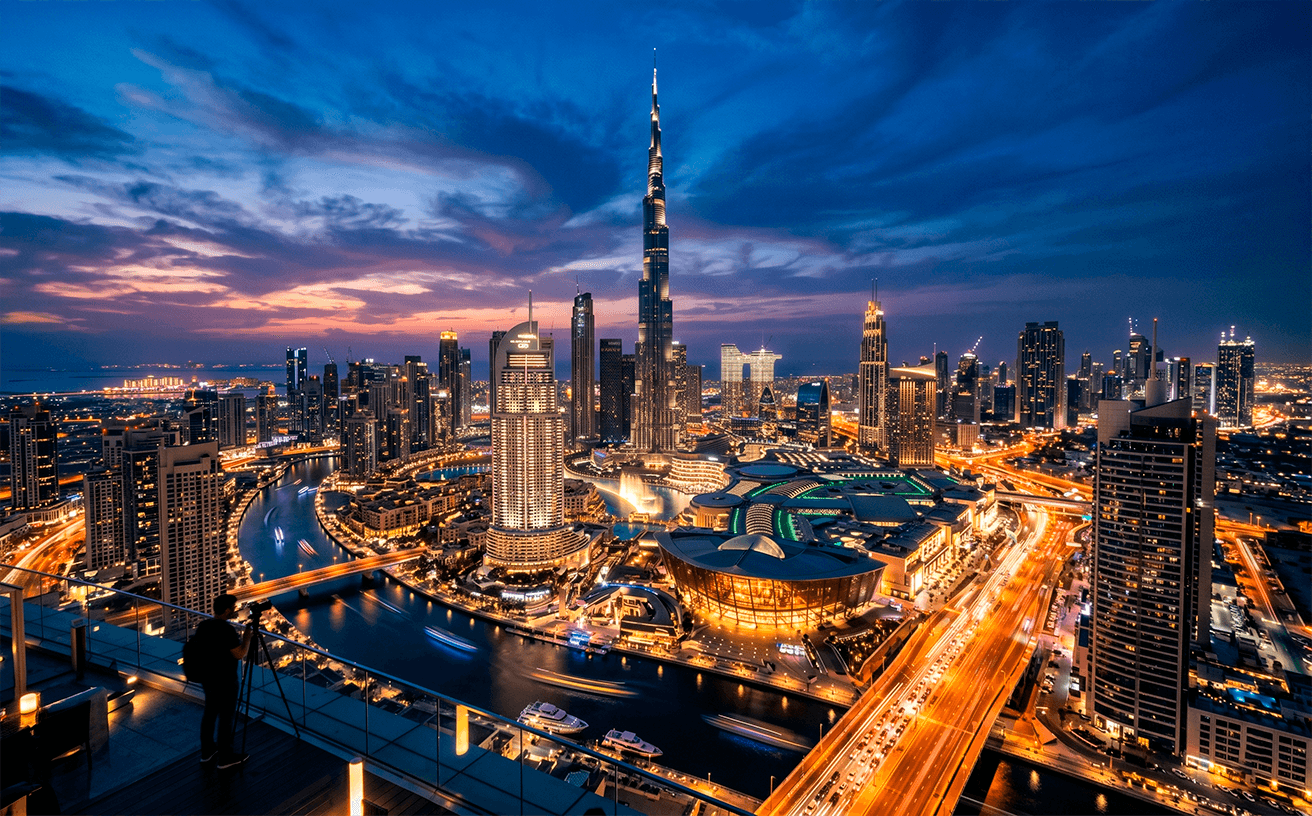
Dubai does not have a single center; it is polycentric. Your choice of location defines your lifestyle. Choosing the wrong neighborhood can result in hours spent in traffic on Sheikh Zayed Road or a lack of pedestrian infrastructure.
Rent Benchmarks (1-bed / year)
- JVC, Arjan (Budget): 65k — 85k AED
- JLT, Dubai Hills: 90k — 120k AED
- Marina, Downtown: 130k — 180k+ AED
- Price Index: RTA Rent Calculator
Downtown & Business Bay
The business pulse of the emirate. High concentration of offices, proximity to Burj Khalifa and Dubai Mall. Ideal for single expats and couples working downtown. Drawbacks: heavy traffic, high cost per square meter, and limited green spaces for pets.
Marina, JBR & Bluewaters
Famous waterfront districts with pedestrian promenades and yachts. Excellent infrastructure for leisure. Specifics: high humidity in summer, constant tourist flow, and exiting the Marina during rush hour can take over 30 minutes due to narrow interchanges.
Master-Communities (Villas)
Gated communities from major developers, designed specifically for families. Inside: parks, private schools, golf courses, and security. Absolutely Pet-Friendly. Living here without a personal car is highly inconvenient (no metro access).
Residential (JVC, Arjan, Sports City)
Leaders in demand among new expats. Jumeirah Village Circle (JVC) offers modern housing at reasonable prices. Drawbacks: these areas are in a state of permanent construction, face street parking issues, and lack metro stations.
Jurisdictions and Freelance Status.
The UAE is a global hub for entrepreneurs. Your choice of jurisdiction (Free Zone or local market) dictates your rights, tax burden, and operational freedom. A freelance visa is the most straightforward legalization path for digital professionals.
Startup Benchmarks (Estimates)
- Free Zone License (no visas): from 12,000 AED / year
- Freelance Permit: ~7,500 AED / year
- Corporate Tax: 9% (profits > 375k)
- Share Capital: Often not required (0)
Mainland vs Free Zone
Mainland (DED) allows unrestricted business with any client in the UAE domestic market. A Free Zone grants 100% foreign ownership but restricts direct trading of goods within the UAE (a local distributor is required). Ideal for IT and services.
Free Economic Zones
There are over 40 free zones in the UAE. The most popular for consulting and IT are IFZA and Meydan. For trading and crypto, the prestigious DMCC is preferred. To minimize startup costs, expats often choose free zones in neighboring emirates, such as Shams (Sharjah).
Freelance Visa (Permit)
The optimal status for designers, programmers, and consultants. You acquire a Freelance Permit and a residency visa, which allows you to legally provide services and issue invoices. Setting up a full-fledged company with a corporate entity is not necessary for this.
Banking (Compliance)
The most challenging phase of business. UAE banks strictly adhere to AML procedures. To open a corporate account, you must prove Substance (business reality): provide contracts, a founder’s CV, and a business plan. The easiest way to start is with digital banks like Wio.
Logistics without a car.
Although Dubai was primarily designed for motorists, the RTA transport network allows for comfortable city navigation without a personal vehicle. The core of the system is the driverless metro and the unified NOL Card, valid across all modes of public transport.
Fare Rates (NOL Silver)
- Within 1 Zone (Tier 1): 3.00 AED
- Crossing 2 Zones (Tier 2): 5.00 AED
- Crossing 3+ Zones: 7.50 AED
- NOL Gold (VIP Class): Double Fare (×2)
Unified NOL System
NOL is the mandatory payment card for the metro, buses, trams, and even RTA paid parking. The standard choice for residents is the Silver Card. It must be tapped on the validator upon entry and exit for the system to accurately calculate the zones traveled (Check-in / Check-out).
Dubai Metro
A fully automated, driverless rapid transit system consisting of two main lines. Each train features dedicated sections: standard cabins, a women and children only cabin (marked in pink), and the premium Gold Class cabin with leather seating (premium fare applies).
Surface Transport
The bus network covers areas not serviced by the metro. A key feature of the UAE is its enclosed, air-conditioned bus shelters, providing essential relief during the summer. The Dubai Marina and Al Sufouh areas are also served by a tram line, seamlessly integrated with the metro system.
Strict RTA Regulations
Ticket inspectors operate regularly. The fine for riding in a Gold Class cabin with a standard card is 200 AED. Men are strictly prohibited from entering the women’s cabin (even if empty) — 100 AED fine. Consuming food, beverages, or chewing gum on the metro is strictly prohibited (100 AED fine).
International Driving Permit (IDP).
Hitting the UAE roads requires more than just your national license. Presenting a UN-recognized International Driving Permit is a strict legal requirement for tourists to rent and drive vehicles. Avoid insurance invalidation and secure your document via official channels.
Legal Risks & Facts
- Police Fine (No IDP): Up to 5,000 AED
- Insurance Validity: Void without IDP
- Global Coverage: 150+ Countries
- Validity Period: 1 to 10 Years
Global Compliance Center
To guarantee your permit is recognized by Dubai Police and major rental agencies, apply directly through the Official IDA UAE Headquarters. This ensures absolute legal compliance worldwide.
Regional CIS Logistics
Travelers and expats from Central Asia can utilize the Kazakhstan Representative Office. It provides localized support and fast-tracked physical delivery of your booklet right to your door.
Instant Digital Issuance
Need a permit immediately at the car rental counter? Submit your documents through the Express Digital Portal to receive a valid, legal digital copy to your smartphone within minutes.
Rental Agency Compliance
Major car rental agencies (like Hertz, Avis, and local luxury providers) will instantly reject your booking if you cannot present an IDP alongside your national license. Don’t let your vacation or business trip be ruined by a missing document.
Critical Queries and Hidden Risks.
Living in an Islamic state dictates strict rules of conduct. We have compiled the top 5 most frequently asked questions from new residents regarding investments, laws, and managing daily life within the emirate.
Critical Risk Zone
- Using VPN (for illegal purposes): Fine up to 2m AED
- Swearing / Obscene gestures (even online): Jail / Deportation
- Issuing a Bounced Cheque: Criminal Liability
- Photographing people without consent: Fine up to 500k AED
Can I open a bank account on a tourist visa?
Yes, but with strict limitations. Tourists are exclusively permitted to open Savings Accounts. You will receive a debit card, but a chequebook will not be issued. You must provide a passport with an entry stamp and a 6-month bank statement from your home country (translated).
How do I get a «Golden Visa» in the UAE?
This is a 10-year residency visa. The most popular and reliable route for expats is purchasing real estate valued at a minimum of 2,000,000 AED (approx. $545,000). The visa can also be granted to outstanding talents, doctors, scientists, and specialized IT professionals subject to government approval.
Can I buy real estate in Dubai with cryptocurrency?
Developers and the Dubai Land Department (DLD) do not accept cryptocurrency directly. Transactions are processed through certified OTC brokers. You transfer crypto assets (USDT, BTC) to them, and they issue an official Manager’s Cheque in the name of the seller or developer.
What unusual cultural laws might expats break?
There are several. Alcohol consumption is only permitted at home or in licensed hotels. Swearing or making an obscene gesture on the street (or even in a WhatsApp message) can lead to court and deportation. During the month of Ramadan, eating, drinking water, or smoking in public during daylight hours is forbidden.
Is it difficult to move to Dubai with a dog or cat?
The importation process itself requires a permit from MOCCAE, a microchip, and rabies titer tests. However, Dubai is not considered a very pet-friendly city: dogs are strictly prohibited on public beaches, in parks without special permits, in shopping malls, and on all public transport.